
Blog
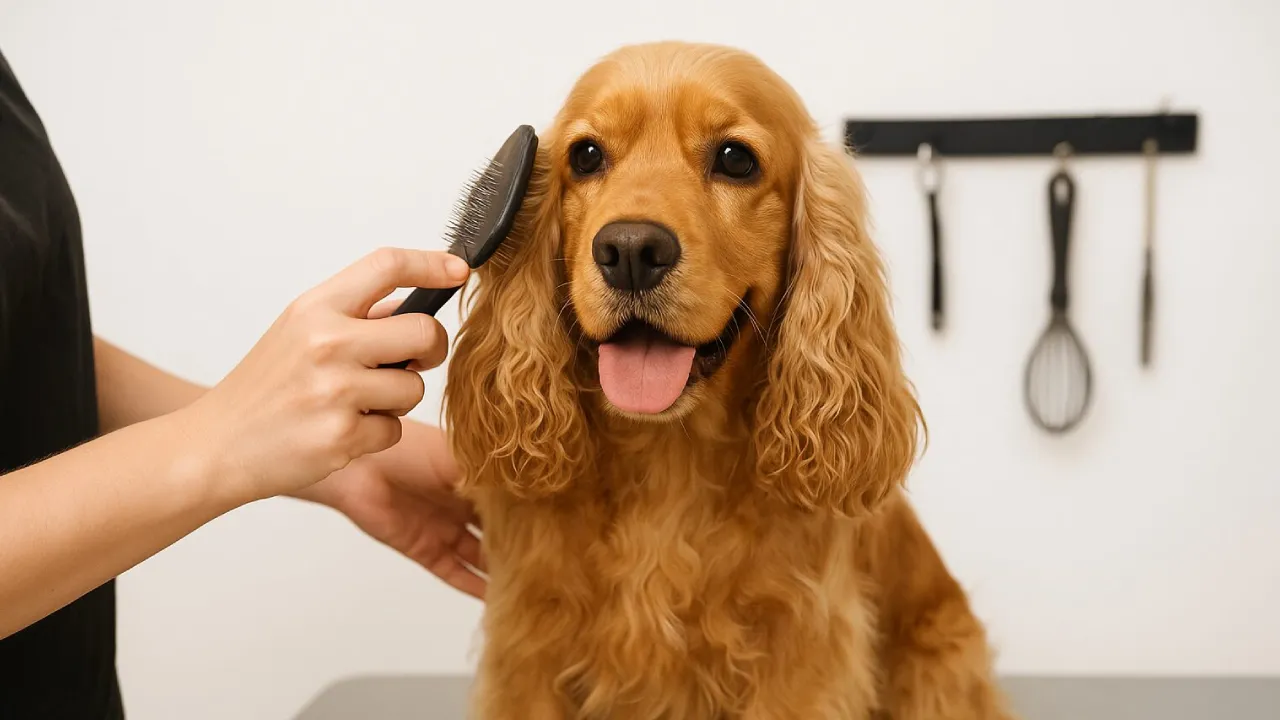
Cocker Spaniel Grooming: The Complete Guide

I’ve made pretty much every grooming mistake it’s possible to make with a cocker spaniel, including letting a groomer clip my show cocker’s coat down against my better judgement early on. It never fully recovered. If you’d rather skip that lesson, here’s everything I’ve learned about keeping a cocker’s coat — and ears — properly maintained.
Why Cocker Spaniel Grooming Depends on Type
Grooming needs differ significantly depending on whether you have a show cocker spaniel or a working cocker spaniel. Show coats are thick, silky and prone to matting. Working coats are finer, flatter and considerably lower maintenance. If you’re not sure which type your dog is, that guide breaks down how to tell.
Brushing a Cocker Spaniel
Regardless of type, regular brushing is the single biggest thing that keeps a cocker’s coat manageable.
My routine:
- Show coat: brush two to three times a week, focusing on ears, legs and the belly where matting starts fastest
- Working coat: a couple of times a week is usually enough
- Always brush before bathing, never after — wet matted fur tightens and becomes far harder to remove
A slicker brush and a metal comb are the two tools I wouldn’t be without. Cheap plastic brushes just don’t get through a show coat properly.
Trimming and Professional Grooming
I take mine to a professional groomer every six to eight weeks. It’s worth finding someone specifically experienced with breed-standard cocker cuts, particularly if you want to preserve a show-style coat rather than have it clipped short.
If cost is a concern, some grooming can be done at home between professional visits — trimming paw feathering, tidying around the eyes, and keeping the sanitary area clean. The PDSA has general grooming guidance worth reading if you’re new to at-home grooming and want to build good habits safely.
Ear Care
Cocker spaniels are prone to ear problems because of their long, low-set, heavily furred ears, which trap moisture and reduce airflow. This is one area I now treat as non-negotiable weekly maintenance, not an occasional afterthought.
My routine:
- Check ears weekly for odour, redness or excess wax
- Clean gently with a vet-approved ear cleaner, never cotton buds deep in the canal
- Dry ears thoroughly after swimming or bathing
Our cocker spaniel health problems guide covers ear infections and other breed-specific conditions worth watching for in more detail.
Bathing
I bathe mine roughly once a month, or after anything particularly muddy. Over-bathing can strip natural oils from the coat and actually make matting worse, so little and often beats frequent full baths.
Common Grooming Mistakes
From my own experience and plenty of conversations with other cocker owners over the years, these come up again and again:
- Letting an inexperienced groomer clip a show coat down with clippers, permanently changing its texture
- Skipping ear checks until an infection is already established
- Brushing over mats instead of working them out properly, which just causes discomfort
- Bathing too frequently, drying out the coat
Frequently Asked Questions
How often should you groom a cocker spaniel? Brushing two to three times a week for a show coat, or twice weekly for a working coat, alongside professional trims every six to eight weeks.
Do cocker spaniels need professional grooming? It’s not strictly essential, but for show-type coats it makes a real difference to coat health and appearance. Working coats can often be managed with more basic home grooming.
Why does my cocker spaniel keep getting ear infections? Their long, low-set ears trap moisture and restrict airflow, making infections more common than in breeds with upright ears. Weekly cleaning significantly reduces the risk.
Final Thoughts
Grooming a cocker spaniel properly is more of a commitment than most new owners expect, particularly with a show-type coat, but it becomes second nature fairly quickly. Get into a weekly rhythm early and you’ll avoid most of the problems I only learned about the hard way.